spx.cx
spx.cx is a self-hostable short-link and tracking platform that combines public URL shortening, email pixel tracking, and production-grade admin controls. The platform is designed to balance growth workflows with runtime security and operability. It is also structured for straightforward Docker-based deployment with minimal configuration overhead.

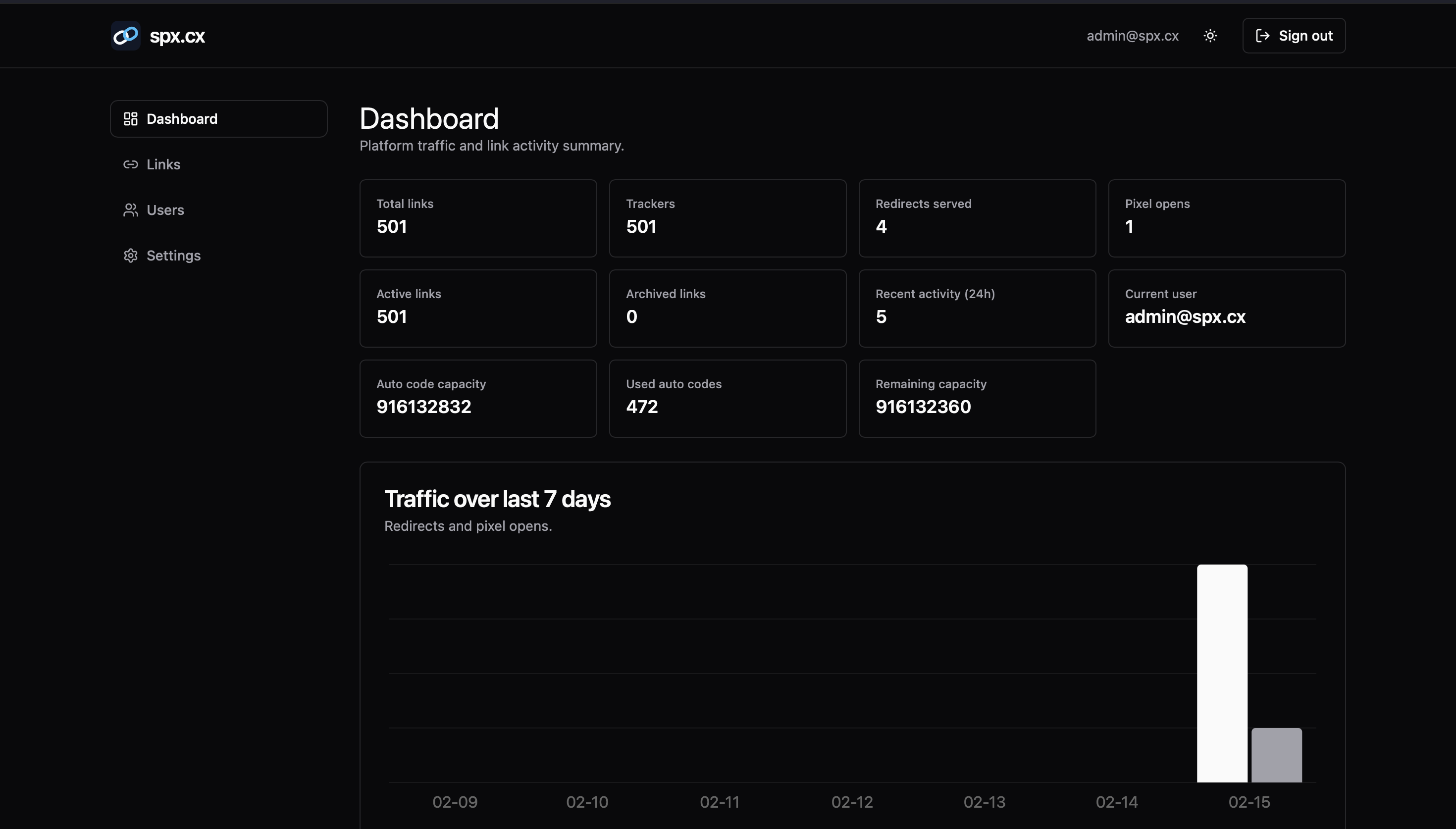
Dashboard
The dashboard consolidates key traffic, conversion, and performance signals so teams can monitor campaign health from a single control surface. It is built for fast operator decision-making rather than fragmented reporting.
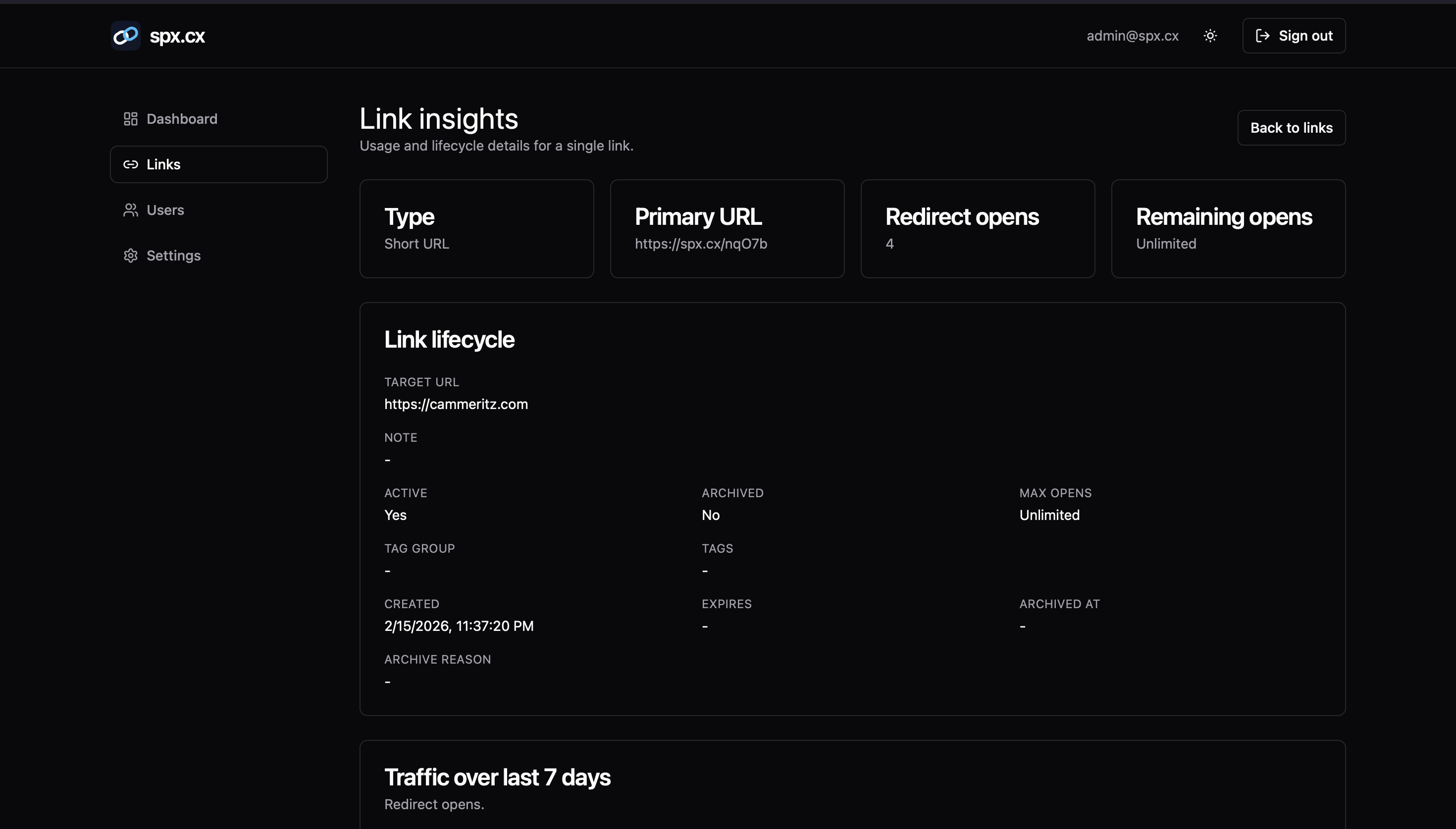
Link/Pixel Insights
Per-link analytics and pixel events provide attribution visibility across channels. Redirect and open metadata are captured for actionable insights without relying on external analytics SDKs. In this context, a pixel is a tiny embedded image in an email that triggers an open event when loaded.
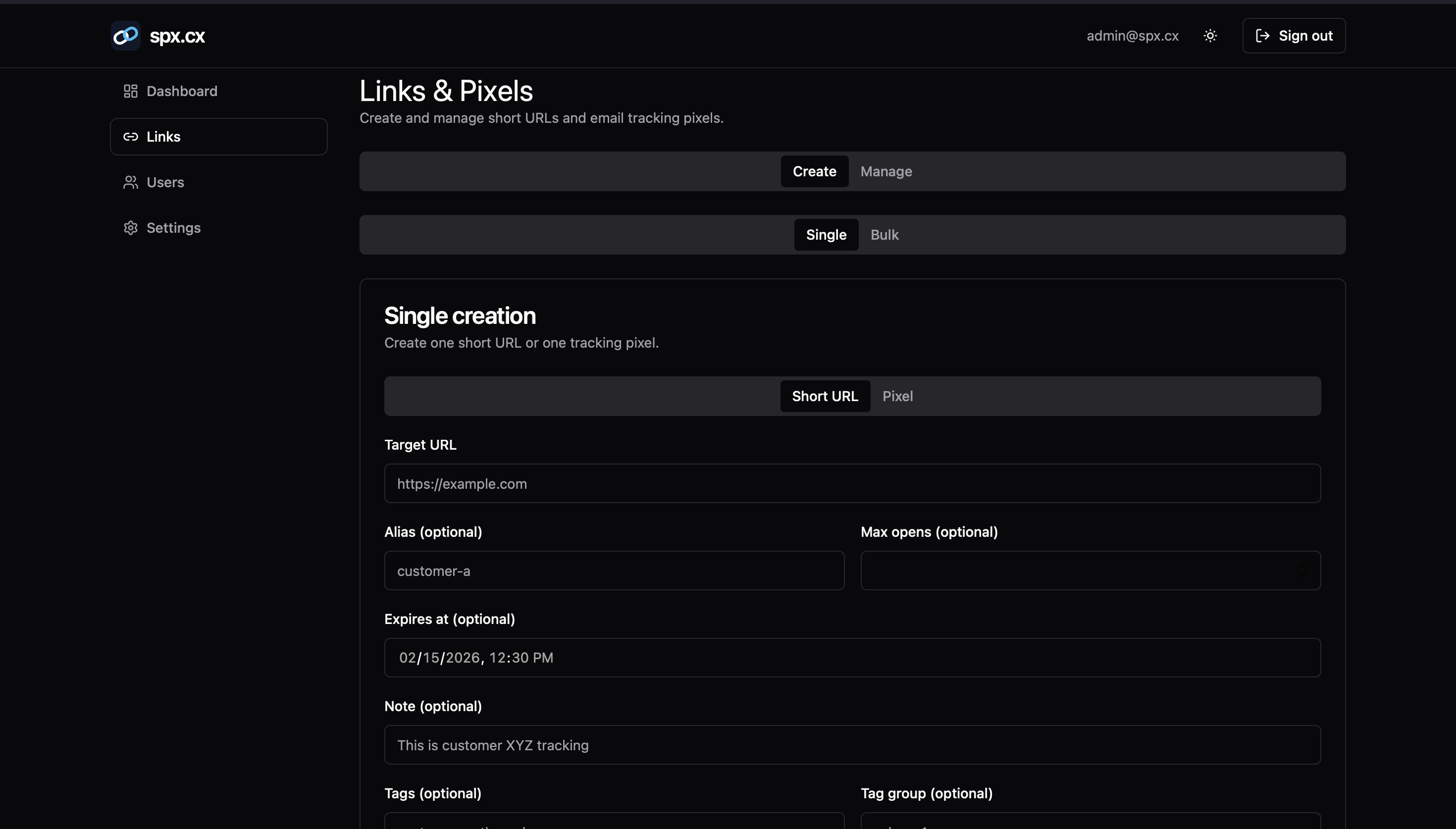
Creation with More Flags
The creation engine supports autogenerated links, fixed aliases, tracking pixels, and batch generation with per-item validation and metadata. Public creation can be protected with rate limiting and optional CAPTCHA to balance growth and abuse resistance.
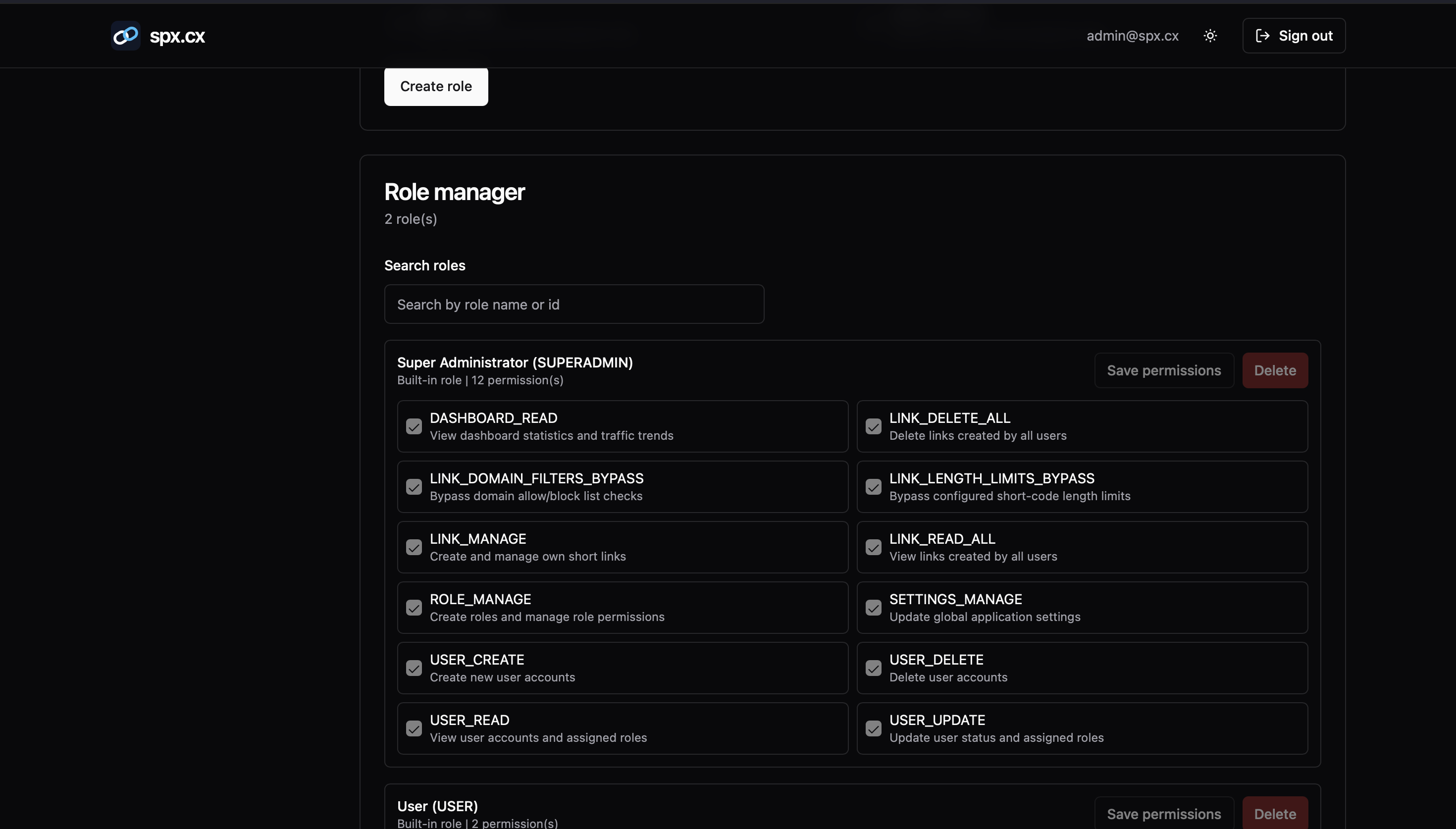
User/Role Management
Admin workflows include user CRUD, custom role and permission assignment, account status control, and forced password-change enforcement. The platform supports JWT user auth and revocable API keys for machine access.
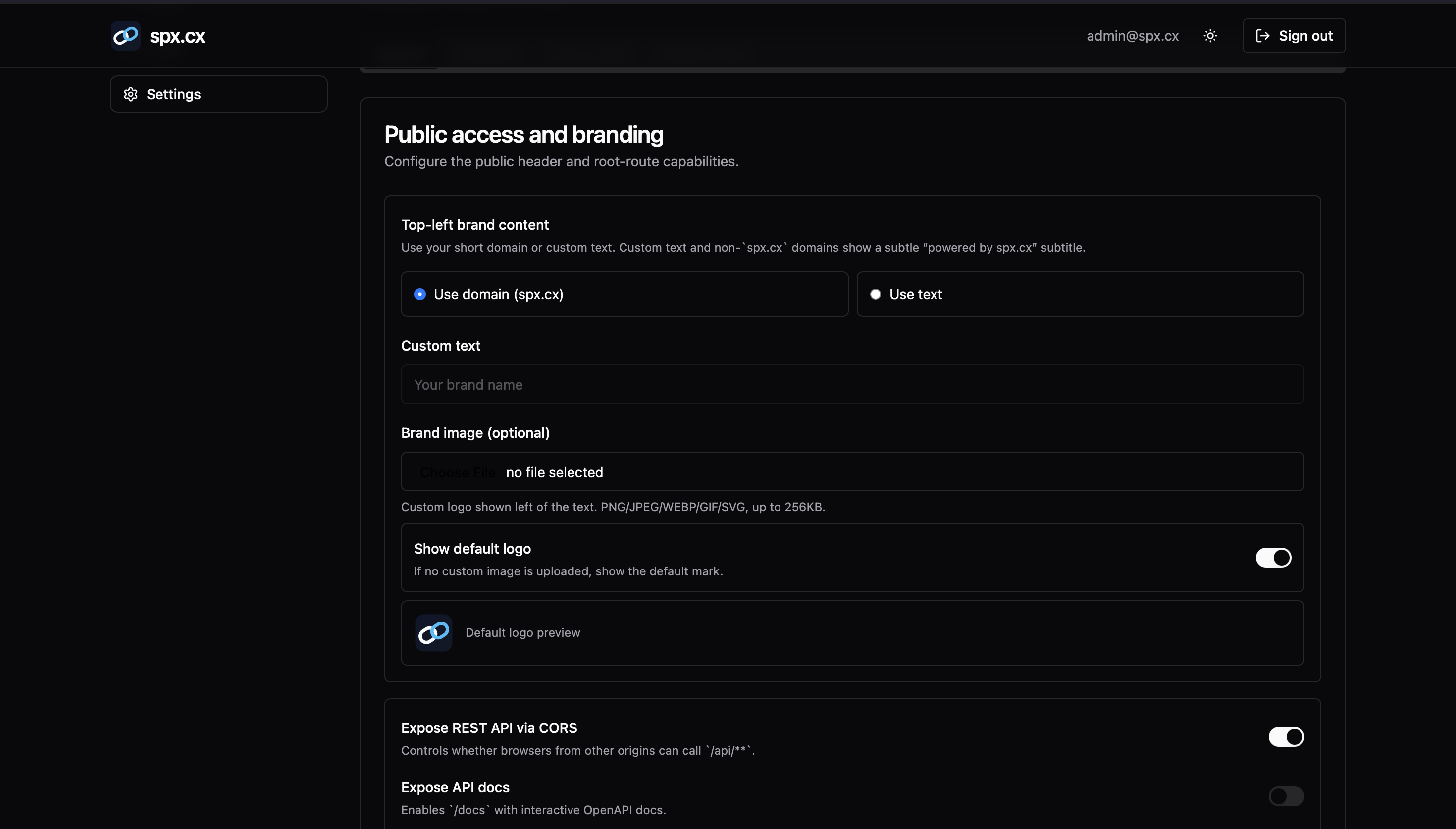
Whitelabeling Management
Operators can adjust branding, domain policies, API/docs exposure, CORS behavior, and code-space constraints at runtime without redeploying. This enables white-label and client-specific setups while keeping operational guardrails in place.
Technologies
Project Focus
- Secure link operations with granular RBAC and JWT/API-key authentication
- Public shortening and tracking pixels hardened by rate limiting and CAPTCHA
- Runtime controls for branding, API exposure, and code-space policy without redeploys
Links
Visit WebsiteArchitecture Highlights
- Active and archived link keyspaces preserve analytics history.
- Dynamic API/docs exposure and CORS policy via runtime config.
- Root short-code routing coordinated with SPA route exclusions.
- Distributed rate limiting with Redis counters and TTL windows.